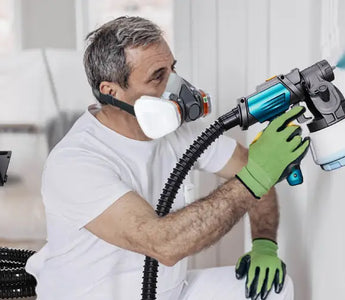
Choosing the right paint sprayer can make a huge difference in the final result of a painting project. A sprayer that works well for refinishing furniture may not be the best choice for painting an entire wall or fence.
The two most common types of paint sprayers are HVLP (high volume, low pressure) paint sprayers and airless paint sprayers. While both can help you finish projects faster than traditional brushes and rollers, they are designed for different purposes.

In general, HVLP paint sprayers are better for projects that require precision and a smooth finish, such as furniture, cabinets, doors, and DIY crafts. Airless paint sprayers are better for large surfaces where speed and coverage matter most, such as walls, fences, and exterior projects.
Understanding the differences between HVLP and airless technology will help you choose the right tool for your specific project.
HVLP vs Airless for Cabinets: Which Is Better?
For most cabinet projects, HVLP is the better choice because it provides more control and a smoother finish. Airless sprayers are faster, but they are better suited to large surfaces where speed matters more than fine finishing.
| HVLP | Airless | |
|---|---|---|
| Cabinet finish | Excellent | Good |
| Overspray | Lower | Higher |
| Control | Excellent | Moderate |
| Speed | Slower | Faster |
| Best for | Cabinets & furniture | Walls & large surfaces |
What Is an HVLP Paint Sprayer?
HVLP stands for "high-volume low pressure." An HVLP paint sprayer uses a large volume of air at low pressure to break paint into small droplets and create a controlled spray pattern.
Unlike traditional spray guns that rely on high pressure, HVLP systems focus on improving transfer efficiency and reducing overspray. This makes them especially popular among DIY users, woodworkers, and anyone who cares about surface finish.
A typical HVLP paint sprayer allows users to adjust the following:
● Spray pattern (horizontal, vertical, or circular)
● Paint flow rate
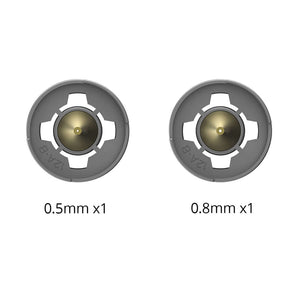
● Nozzle size
● Spray width
These adjustments give users more control over the final coating.
Advantages of HVLP Paint Sprayers
Better Finish Quality
The biggest advantage of an HVLP sprayer is control.
For projects like furniture restoration or cabinet painting, the final appearance matters. HVLP sprayers produce a smooth and even coat that can help minimize visible brush marks and uneven coverage.
This is why many DIY painters choose HVLP technology for the following:
- wooden furniture
- Kitchen cabinets
- Interior doors
- Decorative projects
Less Overspray
Because HVLP systems operate at lower pressure, they generally create less overspray compared with airless sprayers.
This makes them easier to use for indoor projects where protecting surrounding areas is important.
For example, when painting a cabinet door in a garage or workshop, better spray control means less paint drifting onto nearby surfaces.
Easier for Beginners
For many first-time users, an HVLP paint sprayer is easier to manage because the spray output is more controlled.
Beginners can gradually learn:
- How much paint to apply
- How fast to move the sprayer
- How far to hold the nozzle from the surface
Best Uses for HVLP Paint Sprayers
HVLP sprayers are ideal for projects where finish quality is more important than speed.
Furniture Painting
HVLP is one of the most popular choices for furniture makeovers.
Examples:
- Tables
- Chairs
- Dressers
- Wooden cabinets
A controlled spray helps create a factory-like finish without leaving roller texture or brushstrokes.
Cabinet Painting
Cabinet doors often have large flat surfaces and detailed edges. HVLP sprayers allow users to apply thin, even layers while maintaining control around corners and grooves.
DIY Home Improvement
HVLP sprayers are also suitable for:
- Interior doors
- Trim
- Small outdoor furniture
- Hobby projects
For homeowners looking for a versatile DIY solution, products like the Tilswall Shark800 HVLP Paint Sprayer are designed around these types of applications, combining adjustable spray settings with enough power for common home projects.
What Is an Airless Paint Sprayer?
An airless paint sprayer works differently from an HVLP system.
Instead of using compressed air to atomize paint, an airless sprayer uses a high-pressure pump to force paint through a small nozzle. The pressure breaks the paint into tiny droplets and creates a wide spray pattern.

Because of this design, airless sprayers can apply paint much faster than HVLP systems.
They are commonly used by:
- Professional painters
- Contractors
- Homeowners with large projects
Advantages of Airless Paint Sprayers
Faster Coverage
The biggest benefit of an airless sprayer is speed.
When painting large areas such as
- Interior walls
- Ceilings
- Exterior siding
- Fences
An airless sprayer can cover much more surface area in less time compared with HVLP.
Handles Thicker Coatings
Airless sprayers are designed to handle many thicker coatings without requiring as much thinning.
This makes them useful for:
- Exterior paints
- Primers
- Large surface applications
Better for Large Projects
If your goal is to paint an entire house exterior or multiple rooms, productivity becomes more important than precision.
This is where airless technology has an advantage.
HVLP vs. Airless Paint Sprayer: Key Differences
The easiest way to understand the difference is to compare what each tool is designed to do.
| Feature | HVLP Paint Sprayer | Airless Paint Sprayer |
| Spraying method | Low-pressure air atomization | High-pressure paint pump |
| Best strength | Smooth finish and control | Fast coverage |
| Ideal projects | Furniture, cabinets, doors | Walls, fences, large surfaces |
| Overspray | Lower | Higher |
| Ease of control | Easier for beginners | Requires more practice |
| Paint usage | More efficient for small projects | Better for large projects |
| Finish quality | Excellent | Good |
| Speed | Moderate | Very fast |
HVLP vs. Airless: Which One Is Better for Different Projects?
The right choice depends mainly on what you are painting.
For furniture, choose HVLP.
If you are repainting furniture, HVLP is usually the better option.
Why?
Furniture projects require:
- Smooth surfaces
- Precise spraying
- Multiple thin coats
- Better control around edges
A high-pressure airless sprayer may be faster, but it can be more difficult to control on smaller projects.
For Cabinets: Choose HVLP
Cabinet painting is one of the strongest use cases for HVLP.
The controlled spray pattern helps achieve the following:
- Even coverage
- Professional-looking finishes
- Fewer visible imperfections
For DIY cabinet upgrades, an HVLP paint sprayer is often a practical alternative to hiring professional painters.
For Walls and Ceilings: Choose Airless
When painting large flat surfaces, speed becomes the priority.
Airless sprayers are usually better for:
- Bedrooms
- Living rooms
- Garages
- New construction projects
A large spray pattern allows painters to finish large areas much faster.
For Outdoor Projects: Choose Airless
Projects like:
- Fences
- Decks
- Exterior walls
- Usually benefit from airless technology.
These projects require covering large areas quickly, and a high-output sprayer can significantly reduce working time.
HVLP vs. Airless Paint Sprayer: Which Is Better for Beginners?
For most DIY beginners, an HVLP paint sprayer is usually the easier starting point.
The reason is simple:
Most beginners are not painting entire houses. They are usually working on smaller projects such as the following:
- Furniture upgrades
- Home decorations
- Cabinets
- Doors
HVLP gives beginners more control while they learn.
- Proper spraying distance
- Paint consistency
- Spray movement
However, if your first project is repainting several rooms or a large outdoor area, an airless sprayer may save significant time.
Can One Paint Sprayer Do Everything?
Technically, many paint sprayers can handle multiple applications. However, no single type is perfect for every project.
A useful rule:
Choose HVLP when finish quality matters more than speed.
Examples:
- Furniture
- Cabinets
- Detailed projects
Choose airless when coverage speed matters more than precision.
Examples:
Walls
Large exterior surfaces
Commercial projects
Choosing based on your project will usually produce better results than choosing based only on the sprayer's power rating.
Frequently Asked Questions
Is HVLP better than airless for furniture?
Yes. HVLP is generally better for furniture because it provides better control and creates a smoother finish with less overspray.
Is an airless paint sprayer faster than HVLP?
Yes. Airless sprayers are designed for high-speed coverage and are usually faster for large surfaces.
Can I paint walls with an HVLP sprayer?
Yes, but it may take longer because HVLP sprayers are optimized for precision rather than maximum coverage speed.
Which paint sprayer is best for beginners?
For most DIY beginners, HVLP paint sprayers are easier to control and are suitable for common home projects like furniture, cabinets, and doors.
Do HVLP paint sprayers waste less paint?
Generally, HVLP sprayers create less overspray, which can help reduce paint waste, especially for smaller projects.
Final Thoughts: HVLP or Airless Paint Sprayer?
There is no universal winner between HVLP and airless paint sprayers. The best choice depends on your project.
Choose an HVLP paint sprayer if you want:
- Smooth finishes
- Better control
- Furniture and cabinet painting
- DIY-friendly operation
Choose an airless paint sprayer if you need:
- Faster coverage
- Large-area painting
- Exterior projects
For most homeowners and DIY enthusiasts, an HVLP paint sprayer provides the best balance between control, finish quality, and versatility.
Explore Tilswall’s range of paint sprayers to find the right tool for your next painting project.