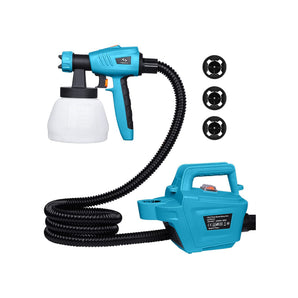
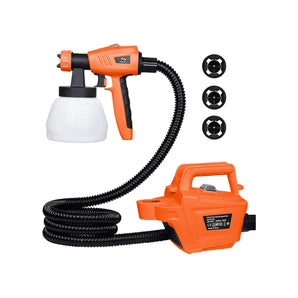
Tilswall DIY paint sprayers are designed for homeowners, makers, and beginners who want a faster and smoother painting experience.
Compared with traditional brushes and rollers, a lightweight electric paint sprayer helps create an even finish on furniture, crafts, doors, fences, and other home improvement projects. Explore our complete range of paint sprayers for different projects.
What types of paint are compatible with the spray gun?
The spray gun is compatible with a wide range of coatings, including:
Water-based paints
Solvent-based paints
Primers
Varnishes
2-component paints
Clear finishes
Automotive finishes
Staining sealers
Wood sealers and preservatives
Are there any coatings that should not be used with the spray gun?
Yes. Do not use the spray gun with:
Alkaline or acidic paints
Coatings with a flash point below 55°C (131°F)
For the best spraying performance, always check the coating manufacturer's instructions and thin the paint to the recommended viscosity when necessary.
How should I thin paint for use with the spray gun?
Always thin paint according to the manufacturer's instructions. Use clean water for water-based paints and the recommended thinner for oil-based or solvent-based paints. Avoid using the wrong thinner or over-thinning, and always strain the paint before spraying to remove lumps and prevent clogging.
How should I thin paint for use with the spray gun?
Thin the paint according to the manufacturer's instructions. Use clean water for water-based paints and the specified thinner for other paints. Avoid over-thinning and always strain the paint before spraying.
What is the correct spraying technique for an even finish?
For smooth, consistent results, follow these guidelines:
Distance
Hold the spray gun 10–30 cm (4–12 in.) from the surface. Maintain a consistent distance throughout the entire project.
Motion & Overlap
Move the spray gun in smooth, parallel strokes at a steady speed of approximately 30–60 cm (12–24 in.) per second. Overlap each pass by approximately 50% to ensure even coverage and help prevent streaks.
Orientation
Keep the spray gun perpendicular to the surface at all times. Avoid tilting or arcing the gun to maintain a uniform finish.
Pro Tip: Keep the gun moving before pulling the trigger, and release the trigger before stopping to help prevent uneven buildup.